October 12, 2026
Conference report on the 2026 Biofouling Management Conference – Climate Action and Marine Conservation
The Norderney Institute for Antifouling, run by Dr. Brill + Partner (DBP), has organised the Biofouling Management Conference on Norderney for the third time, in collaboration with the Northern Germany Maritime Cluster (MCN), the GreenShipping Lower Saxony initiative and the Federal Maritime and Hydrographic Agency (BSH). The German Sailing Association (DSV) and the German Motor Yacht Association (DMYV) were also ‘on board’ once again. Over 50 experts from industry, research, associations and public authorities took part in the two-day event, which was fittingly held at the port terminal of AG Reederei Norden-Frisia.
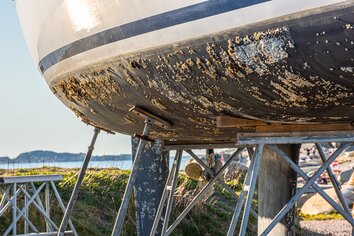
The 21 presentations and subsequent discussions focused on how ship and boat hulls can be better protected against biofouling in order to reduce the associated increase in friction – and consequently in fuel consumption and CO₂ emissions – without placing an unnecessary burden on the marine environment. Even an inconspicuous biofilm on hulls leads to a significant increase. Consequently, interim inspections and cleaning of ships whilst in the water have come increasingly into focus in recent years, with a view to achieving the goal of climate neutrality for shipping by 2050. Presentations were given on the topics of coatings, cleaning technologies and regulatory frameworks, highlighting the realisation that, whilst much is already technically feasible, progress is often hindered by the fact that the rules governing when, where and how cleaning may be carried out in the water have not yet been defined. The BSH and the Federal Environment Agency (UBA), as federal authorities, and the Bremen Senate Department for the Environment, as a state authority, aim to establish a framework for local authorities, as it is their responsibility to grant authorisation for cleaning operations.
Dr. Brill + Partner are carrying out valuable research in this area through several projects:
Biologist Soyla Kraus presented the BioSHIP project, in which new coatings are being developed in collaboration with Fraunhofer IFAM, Momentive Performance Materials and the company Hydrotox; these coatings contain biodegradable substances and thus release fewer biocides and microplastics. In 2027, the most promising coatings are also set to be tested on a Frisia ferry.
Dr Florian Gerland from the University of Kassel presented the LABROID project, in which a cleaning robot is being further developed in collaboration with DBP so that, using cameras and AI analysis, it can autonomously detect the extent of fouling on the ship’s hull whilst underway and clean it accordingly. The Briese shipping company from Leer is providing ship units for this project.
Benjamin Emde from the Hannover Laser Centre presented the joint project AquaLas, which aims to eliminate biofouling on aquaculture nets using laser radiation. Tests for outdoor facilities are taking place at DBP on Norderney, whilst those for indoor facilities are being conducted at Fraunhofer IMTE in Büsum.
Bernd Daehne from DBP emphasises that what makes the conference on Norderney unique is the high proportion of representatives from public authorities, who must, of course, be fully on board when it comes to the regulatory aspects of underwater cleaning. The Maritime Cluster Northern Germany summarises the event as follows: “Not every question can be conclusively answered in three days – but we have brought together important perspectives, further developed topics and taken away new ideas for the next steps. This is an important step towards developing solutions for biofouling management that are supported by the various stakeholders. As the Maritime Cluster of Northern Germany, we are happy to act as a network to continue this dialogue and connect the participants with one another.”
The participants also praised the successful event and hope it will be repeated in 2027.
The following publications have reported in detail on the 3rd Biofouling Management Conference:
Norderneyer Morgen – Link: here